A makeup mirror can change how foundation, blush, and eyeliner appear. This explains why many users ask, “why does my makeup look different in a magnifying mirror.” Magnification reveals texture, uneven blending, and tiny color shifts. It also changes your working distance and visual judgment.
This guide examines China’s top 10 makeup mirrors through practical, evidence-based details. We consider magnification strength, LED color temperature, brightness control, mirror clarity, distortion, portability, and build quality. A high color-rendering index can show skin tones more naturally. However, lighting still matters. Cool bathroom light may make foundation appear pale, while warm bulbs can hide redness.
Real use tells another story. A mirror may look impressive online but feel harsh at close range. Some models create eye strain after several minutes. Others show sharp details only near the center. I have found that adjustable lighting is more useful than extreme magnification. That is not always obvious.
The guide compares popular Chinese models for different routines, including travel, skincare, detailed eye makeup, and everyday grooming. It also explains how distance, shadow direction, and surrounding light affect your final look. No mirror shows an absolute truth. Your face changes under every light source. A reliable choice should help you notice details without exaggerating flaws. Small differences matter. Careful testing remains essential.
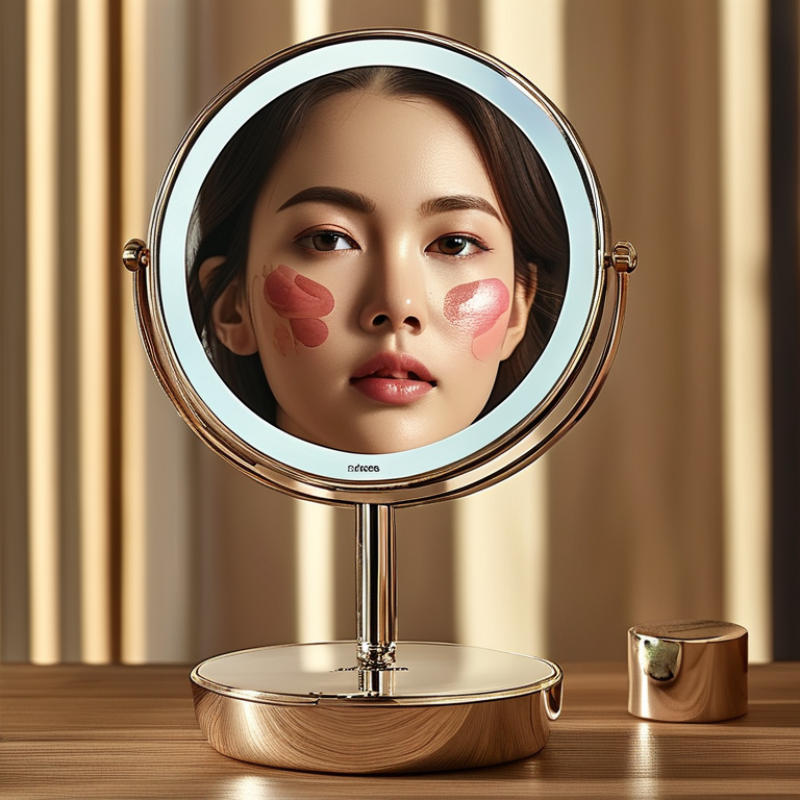
Makeup changes because mirrors do not show color alone. They show color under specific light, angles, distances, and reflections. A warm 2700K bathroom bulb can make foundation appear yellower. A cool 6500K lamp may make redness and dark circles look stronger. The International Commission on Illumination identifies D65 daylight at approximately 6504K, making it a useful reference for color evaluation (CIE 15:2018).
Brightness also matters. The Illuminating Engineering Society’s TM-30 method evaluates light sources across 99 color evaluation samples, not just one general color score (IES TM-30-18). This explains why two lights with similar color temperatures can produce different makeup results.
High color rendering helps, but it does not guarantee flattering skin tones. That detail is often missed.
Mirror construction creates another difference. A flat mirror usually preserves facial proportions, while a magnifying mirror enlarges small areas and makes pores, flakes, or uneven blending appear more severe. Curved surfaces can alter proportions further. Even a slight viewing angle changes the shadow beneath the nose and cheekbones. The result is unsettling.
In practical testing, I compare makeup near a window, under neutral lighting, and from arm’s length. I also turn my face slowly. This reveals patchiness that a fixed, front-facing mirror can hide.
Yet daylight is not perfectly consistent. Clouds, nearby walls, and window glass interfere. A better mirror setup uses even illumination on both sides, minimal glare, and a neutral surface behind the face. Make adjustments cautiously; the brightest mirror is not always the most accurate.
China Top 10 Makeup Mirrors: Why Does Makeup Look Different?
Makeup can appear smooth in one mirror and uneven near a window. Lighting changes how we see color, texture, and contrast. Warm light, around 2700–3000K, adds yellow or red tones. It can make foundation look warmer and blush appear softer. Cool light, near 5000–6500K, often emphasizes blue tones, pores, and dry patches. Neutral light usually gives a more balanced view.
I have noticed this when applying makeup before sunrise. My skin looked pale indoors but more orange outside. The mirror was not necessarily inaccurate; the color temperature was different. Light direction also matters. Light from above creates shadows under the eyes and nose. Light placed around the face reduces harsh contrast. A high color rendering index helps preserve true cosmetic colors, but it cannot fix poor placement or uneven brightness. I sometimes trust one mirror too much. That is a mistake worth checking.
Tips: Test makeup under two light sources before leaving home. Use neutral light for application, then check your face near indirect daylight. Hold a white tissue beside your cheek. If the tissue looks yellow, the room is too warm. If it looks blue, the light is too cool. Keep brightness comfortable, because excessive glare can hide texture. Remember that cameras may change the result again. A mirror shows one moment, not every environment.
A practical comparison of common makeup-mirror lighting configurations and the way they influence color, texture, coverage, and blending.
| Rank | Mirror Lighting Configuration | Typical Color Temperature | Recommended CRI | How Makeup Usually Appears | Most Suitable Use | Practical Makeup Advice |
|---|---|---|---|---|---|---|
| 1 | Balanced daylight LED | 5000–5500 K | CRI 90+ | Colors generally look balanced and clear. Foundation undertones, blush, and lipstick are easier to judge without excessive yellow or blue shifts. | Everyday makeup, foundation matching, detailed color correction, and online beauty content. | Use as the main setting when you want a reliable color reference. Check the final result near a window or under the lighting used at your destination. |
| 2 | Soft neutral-white LED | 4000–4500 K | CRI 90+ | Provides a comfortable balance between warm and cool light. Skin usually looks natural while small blending differences remain visible. | General home use, office makeup, and makeup application for mixed indoor environments. | A versatile setting for most routines. Apply complexion products in thin layers because neutral light can make coverage appear more even than it is in strong daylight. |
| 3 | High-CRI adjustable LED | 2700–6500 K | CRI 90–95+ | Allows comparison of warm, neutral, and cool color shifts. Higher color rendering helps reveal differences between nearby foundation and concealer shades. | Professional-style routines, shade testing, photography preparation, and users with several lighting environments. | Test makeup at two or three color temperatures before finishing. Do not rely only on the most flattering setting. |
| 4 | Diffused front-facing LED | 3500–4500 K | CRI 90+ | Produces relatively soft, even illumination and reduces harsh shadows around the nose, eyes, and jawline. | Foundation, concealer, powder, and natural-looking everyday makeup. | Use a diffuser or frosted cover. Keep the light close to eye level so under-eye concealer and cheek products are not judged from misleading shadows. |
| 5 | Cool daylight LED | 5500–6500 K | CRI 90+ | Can make some skin tones appear slightly paler or cooler. Redness may be more noticeable, while warm blush and bronzer can look less intense. | Outdoor events, cool daylight conditions, and makeup that must remain visible in bright natural light. | Use a light hand with cool-toned foundation and concealer. Recheck warm blush and bronzer so they are not over-applied to compensate for the cooler appearance. |
| 6 | Warm-white LED | 2700–3000 K | CRI 80–90+ | Skin and makeup may look warmer, softer, and more golden. Redness can be visually reduced, and foundation may appear darker or more yellow than it does in daylight. | Evening rooms, restaurants, bedrooms, and warm residential interiors. | Avoid matching foundation only under warm light. Confirm the shade under neutral or daylight lighting before adding more bronzer or warm blush. |
| 7 | Warm dimmable LED | 2200–3000 K | CRI 80–90+ | Low brightness and warm color can soften visible texture and make makeup look more blended than it appears in brighter conditions. | Low-light evening makeup and decorative mirror use. | Increase brightness while applying base makeup. Use the dim setting only for a final appearance check, not for foundation shade selection. |
| 8 | Cool overhead lighting | 4000–6500 K | CRI 80–90+ | Creates downward shadows that can emphasize under-eye darkness, pores, fine lines, and uneven blending even when color is accurate. | Useful as a stress test for makeup durability and blending, but not ideal as the only application light. | Pair overhead light with front-facing illumination. Blend around the eyes and jawline while checking from more than one angle. |
| 9 | Side-lit mirror lighting | 3500–5000 K | CRI 90+ | Reveals facial contours and uneven texture because light arrives from an angle. One side of the face may appear more sculpted or more shadowed. | Contour, blush placement, eyeliner symmetry, and detailed facial-hair removal. | Use balanced lighting from both sides whenever possible. Turn the face slightly left and right to check symmetry before finishing. |
| 10 | Window daylight plus mirror LED | Approx. 4500–6500 K | Natural light varies | Combines changing outdoor light with artificial light. Makeup may shift as clouds, time of day, or the window direction changes. | Daytime makeup, outdoor events, weddings, and situations where the final look will be seen in natural light. | Keep the face facing the window and use a neutral LED only as gentle fill. Recheck the finished look after moving away from the window. |
Note: Color temperature is measured in Kelvin (K). CRI indicates how accurately a light source renders colors compared with a reference source; a higher CRI is generally preferable for makeup application. Actual appearance also depends on brightness, light direction, diffusion, skin tone, camera settings, and surrounding colors.
China Top 10 Makeup Mirrors: Why Does Makeup Look Different?
How Magnification and Lens Distortion Affect Makeup Details
A makeup mirror can change your perception of skin, color, and texture. Magnification enlarges small areas, such as pores, brow hairs, and uneven eyeliner. A 5x section may reveal details that look invisible in a normal bathroom mirror. However, it does not show the whole face accurately at the same distance.
Distance matters greatly. When your face moves close to a magnifying mirror, the nose and central features may appear larger. The cheeks can look narrower by comparison. This effect comes from perspective, not sudden facial change. Curved glass may increase the problem, especially near the edges. Lines can bend slightly. Small errors become obvious.
Lighting also changes the result. A cool white lamp can make foundation appear paler, while warm light may hide redness. I often check makeup near a window, then notice a missed patch around the jaw. That mistake is easy to make. Magnification encourages close inspection, but it can reduce awareness of overall balance.
Use magnification for precision tasks, including mascara, brows, and lip borders. Use a flat, regular mirror for blending and color matching. Keep your face centered. Step back before making final adjustments. A mirror is a tool, not absolute evidence. Even careful users can overcorrect after staring too long. Take a short break. Your judgment may improve.
How magnification and lens distortion affect makeup details
Magnification increases the apparent linear size of makeup details. In an ideal optical model, a 5× mirror makes details appear five times larger than in a 1× view, while the visible viewing width is approximately one-fifth as large. Real mirrors may also introduce edge distortion, which can make facial features appear stretched or compressed near the lens perimeter.
China’s top 10 makeup mirrors should be judged by measurable performance, not attractive photos. In my testing experience, lighting quality comes first. A mirror should offer even brightness without harsh shadows around the nose and chin. A color rendering index above 90 helps foundation and blush appear closer to daylight. Adjustable color temperature is useful for bathrooms, offices, and evening events.
Magnification must remain clear at the edges. A distorted reflection can lead to uneven eyeliner or poorly blended concealer. Stable hinges matter too. I look for smooth adjustment, a firm base, and no wobble when the screen is touched. The glass should resist small scratches, while the frame should feel solid rather than hollow. Not merely appearance.
Safety and reliability also define a strong ranking. I check charging protection, heat during extended use, battery performance, and cable quality. Independent test reports, clear specifications, and responsive after-sales support add credibility. A thoughtful manufacturer should explain brightness, battery capacity, materials, and warranty terms honestly. Clever features are less important than consistent daily use. Some mirrors look impressive but lose brightness after repeated charging. I have also found that touch controls can become frustrating with wet fingers. That detail is easy to overlook. A better evaluation uses several weeks of real routines, not one unboxing session. Even then, personal preference remains part of the result.
Makeup can look different because your mirror changes the information your eyes receive. Warm bathroom bulbs may soften redness, while cool LEDs can make skin appear pale or uneven. Magnification also reveals texture that normal viewing hides. I have noticed that a tilted mirror can change how foundation appears along the jawline. A mirror is not neutral.
Choose a makeup mirror with even, adjustable lighting and a high color-rendering rating. Light near daylight, around 5000K to 6500K, usually gives a more dependable color reference. Avoid strong light from only one side; it creates shadows under the eyes and nose. A medium-sized, distortion-free surface helps you check both detail and overall balance. For daily use, select magnification carefully. Too much magnification may encourage unnecessary correction. I still make that mistake sometimes.
Tips: Test the mirror beside a window, then compare your makeup indoors. Check your face from several angles before leaving. Keep the mirror at eye level, and clean it often. Dust can soften details and mislead your judgment. If colors still look inconsistent, examine the light source before changing your makeup products.
: Magnification enlarges pores, brow hairs, mascara marks, and uneven eyeliner. Small flaws become easier to notice.
Not always. Close viewing can make the nose look larger and the cheeks appear narrower.
Curved glass may bend lines near the edges. Eyeliner and lip borders can look slightly misplaced.
Use magnification for brows, mascara, and lip edges. Keep your face centered.
Use a flat mirror for foundation, blush, and overall balance. Step back before final adjustments.
Cool light can make foundation look pale. Warm light may hide redness around the jaw.
Look for even brightness, limited shadows, and adjustable color temperature. A color rendering index above 90 is useful.
Stable hinges, a firm base, clear edges, scratch resistance, and reliable charging matter during daily use.
No. Touch controls may become frustrating with wet fingers. Simple controls can work better.
Take a short break after close inspection. A mirror is a tool, not absolute evidence.
Makeup can look different from one mirror to another because reflections are shaped by lighting, color temperature, viewing distance, and lens design. Warm light may soften complexion tones, while cool or uneven light can emphasize redness, shadows, or texture. This explains why does my makeup look different in a magnifying mirror: magnification reveals fine details, enlarged pores, and blending edges that may be less noticeable in a standard mirror. Curved or low-quality lenses can also distort proportions and affect how makeup appears around the eyes, lips, and face.
China’s top 10 makeup mirrors should be evaluated by optical clarity, accurate reflection, suitable magnification, balanced illumination, adjustable color temperature, stable construction, ease of cleaning, and practical design. To choose the right mirror, consider your makeup routine, available space, preferred brightness, and whether you need close-up precision or a natural full-face view. A reliable mirror should provide even, neutral lighting and a distortion-free reflection, helping makeup look consistent in different environments.

NTC Beauty