Waterproof mascara is designed to resist water, sweat, and tears. That strength can make brush cleaning unexpectedly difficult. A dry black film may cling between the bristles, especially after several uses. Learning how to remove waterproof mascara from makeup brushes protects the brush, improves application, and supports better hygiene.
Professional makeup artist Lisa Eldridge has emphasized a practical standard: “I clean my brushes after every use when working on clients.” That habit matters, even for personal tools. Still, home cleaning can be less perfect. Some mascara may remain near the brush’s base after one wash. Inspect it closely under bright light.
This guide presents seven careful tips, from choosing an oil-based cleanser to rinsing without flooding the ferrule. It also explains why hot water, harsh scrubbing, and rushed drying can damage delicate fibers. A small glass, a clean towel, and patience are useful tools. Do not twist the bristles aggressively. Do not leave the brush soaking overnight.
The goal is not merely a spotless appearance. It is a softer brush, cleaner makeup, and fewer hidden residues. Results may vary with synthetic fibers, mascara formulas, and drying conditions. That is worth acknowledging. A method that works quickly for one brush may need repeating for another. Clean gently. Check twice.
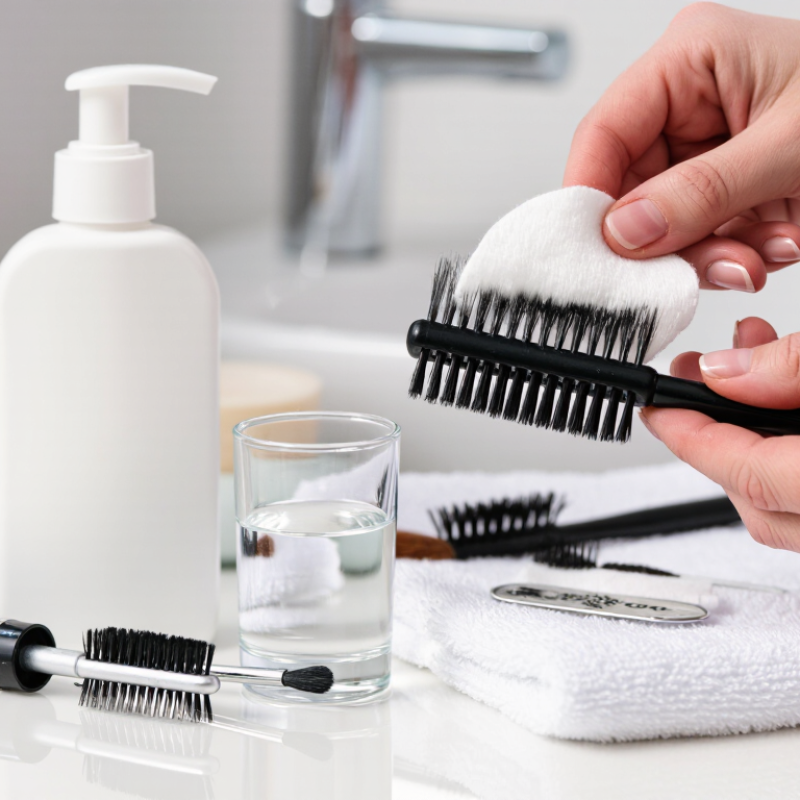
Waterproof mascara buildup feels like black varnish on brush fibers. Check the root, ferrule, and handle first. A stiff, glossy crust usually contains waxes, oils, and film-forming polymers. Do not pull the bristles aggressively; that can distort their shape. In my experience, a dry tissue removes loose flakes, but it will not dissolve the compact layer. Circana’s 2023 U.S. Beauty Market Review reported a 14% rise in prestige makeup sales, showing how frequently complex formulas enter daily routines. More product use also means more brush residue.
Prepare the cleaning area before adding water. Choose a bright, ventilated surface away from food, and place a clean towel underneath. Keep lukewarm water, mild brush cleanser, a shallow bowl, cotton swabs, and a dry towel nearby. Avoid soaking the ferrule, because trapped moisture may weaken the adhesive. I once used too much solvent on a dense brush; the mascara loosened, but the fibers felt rough afterward. That was avoidable.
Work in small sections. Moisten only the bristles, press cleanser into the buildup, and massage from the ferrule toward the tips. Rinse until the water runs clear. The U.S. Food and Drug Administration warns that eye-area cosmetics can become contaminated through repeated use, especially when applicators touch skin. Clean hands and a sanitized workspace matter. If the brush smells sour, sheds heavily, or keeps releasing dark particles, cleaning may not restore it. Discarding it can be the more hygienic choice.
Waterproof mascara contains film-forming ingredients that resist water, so plain soap often leaves dark flakes on brush fibers. Choose a cosmetic-grade, oil-based or biphasic eye-makeup remover. Check that it is designed for the eye area, fragrance-free, and free from acetone or harsh industrial alcohols. The U.S. FDA recommends replacing mascara about every three months because repeated use can increase microbial contamination risks. That guidance matters for brushes, too.
Use seven practical habits.
Read the solvent label.
Patch-test it on one small brush area.
Pour a little into a clean glass.
Never dip the whole handle.
Soak only the bristles for 30–60 seconds.
Wipe from the ferrule toward the tips.
Rinse with lukewarm water and a gentle brush cleanser.
Dry brushes horizontally, with bristles extending beyond the counter edge.
Do not scrub aggressively; it can bend fibers and loosen adhesive. The European Commission’s Scientific Committee on Consumer Safety assesses eye products by concentration, exposure frequency, and application area, which supports a cautious, product-specific approach.
My own mistake was leaving a brush submerged overnight. It looked clean, but the glue softened and the shape changed. Shorter contact works better.
If the remover stings, smells strongly, or separates strangely, stop using it and discard the mixture. Clean tools need patience, not stronger chemicals.
Waterproof mascara clings to bristles because its waxes resist water. Start by wiping away excess mascara with a dry, lint-free tissue. Do not pull hardened clumps. That can bend fine fibers. Grand View Research estimated the global makeup brush market at about USD 1.3 billion in 2023, reflecting how widely these tools are used and maintained.
Apply a small amount of cleansing oil or a professional brush cleanser to the stained tips. Press and roll the bristles between your fingers. Keep the product away from the ferrule and handle. Add lukewarm water gradually, then wipe downward with a clean towel. Hot water may weaken adhesive over time. The U.S. Food and Drug Administration warns that eye-area cosmetics can support microbial growth when cleaning and storage are poor. Rinse until the water runs clear.
Shape the bristles while damp. Dry the brush horizontally, with the tips extending beyond the counter edge. Never dry it upright while wet. I once soaked a brush overnight, thinking longer contact meant better cleaning. The ferrule loosened, and the brush never felt the same. That mistake still matters. A careful, shorter cleaning cycle usually protects softness and shape better. Replace a brush when its fibers remain sticky, smell unusual, or shed heavily after washing.
7 Tips How to Remove Waterproof Mascara from Makeup Brushes?
Waterproof mascara clings to brush fibers because it contains waxes and oil-resistant pigments. Do not pull the residue out while the brush is dry. I learned that dry scrubbing can bend soft bristles and leave hidden flakes near the ferrule.
Tip 1: Apply a small amount of gentle cleansing oil or brush cleanser to the bristles. Massage from the base toward the tips with clean fingers. Avoid soaking the handle or metal ferrule. Tip 2: Wash with lukewarm water and mild soap. Hot water may weaken the glue. Rinse until the water runs clear. It may take two washes. That is normal.
Tip 3: Press the brush gently inside a clean towel. Never twist it. Reshape the bristles, then place the brush flat with the tips extending beyond the counter edge. Tip 4: Disinfect only after washing and rinsing. Use a brush-safe disinfectant, following its stated contact time. Spraying and wiping too quickly may not disinfect effectively. Tip 5: Let the brush dry completely before storing it. A closed, damp container can encourage microbial growth. I sometimes rushed this step, and the brush developed an unpleasant smell. Tip 6: Inspect the bristles and ferrule before reuse. If mascara remains trapped, repeat the cleaning process. Tip 7: Clean mascara brushes regularly, especially after use around the eyes, and never share them. Fresh-looking bristles are not proof of cleanliness.
This practical guide shows the recommended minimum time for each brush-cleaning stage. Use lukewarm water, work a mild cleanser into the bristles, rinse until the water runs clear, disinfect with a brush-safe product, reshape the bristles, and let the brushes dry completely before reuse.
Waterproof mascara leaves a waxy film, so act quickly after each use. I first wipe the brush gently with a lint-free pad. Then I rinse it under lukewarm water, keeping water away from the handle. A small amount of mild brush cleanser loosens the remaining pigment. I work it through the bristles with my fingers, not my nails. Rinse until the water runs clear. Repeat if the tips still feel stiff. My old mistake was using hot water, which softened some brush glue.
Drying deserves more attention than it receives. Press the brush between clean towels, then reshape every bristle with your fingertips. Place it horizontally on a ventilated towel, never upright while wet. The brush should feel completely dry before storage.
A 2019 Journal of Applied Microbiology study reported contamination in approximately 70–90% of used cosmetic products. The same research found that 93% of beauty sponges had never been washed. These figures make storage hygiene practical, not cosmetic perfection.
Inspect the brush under bright light. Look for clumped fibers, leftover black residue, loose hairs, or a sour smell. Discard damaged brushes when cleaning no longer restores them. Store clean brushes in a dry, covered container with space between each tool. I still sometimes rush this step, and that habit needs correction. FDA guidance also recommends stopping eye-product use when irritation appears.
Its waxes and oil-resistant pigments cling tightly to fine fibers. Dry scraping can bend the bristles. That happened to my older brush.
Wipe away excess mascara with a dry, lint-free tissue. Do not pull hardened clumps. Gentle pressure works better.
Use a small amount of cleansing oil or gentle brush cleanser. Massage from the base toward the tips. Keep cleanser away from the handle and metal ferrule.
Use lukewarm water and mild soap. Add water gradually. Rinse until the water runs clear, even if two washes are needed.
Hot water may weaken the adhesive inside the ferrule. I once used hot water and noticed softer glue. It was not my best cleaning choice.
Press it gently inside a clean towel. Never twist the bristles. Reshape the tips, then dry the brush horizontally with the tips beyond the counter edge.
Yes, disinfect it after washing and rinsing. Use a brush-safe disinfectant and follow its contact time. Spraying and wiping immediately may not work fully.
Replace it when fibers stay sticky, smell unusual, or shed heavily. Inspect it under bright light. A clean appearance does not always prove cleanliness.
Removing waterproof mascara from makeup brushes requires patience and a gentle cleaning routine. First, identify areas with hardened buildup and prepare a clean workspace with tissues, a small container, mild cleanser, and a safe oil-based or dual-phase solvent. The key is learning how to remove waterproof mascara from makeup brushes without pulling or weakening the bristles. Apply a small amount of solvent to the stained areas, allow it to loosen the mascara, then wipe carefully in the direction of the bristles. Avoid twisting, scraping, or soaking the brush head for too long.
After the mascara has softened, wash the brushes with lukewarm water and a gentle cleanser until no residue remains. Rinse thoroughly, disinfect with a suitable brush-safe solution, and press out excess moisture with a clean towel. Reshape the bristles, dry the brushes flat with the heads slightly raised, and inspect them for leftover product or damage. Once completely dry, store them in a clean, ventilated container to help maintain their shape and prevent future buildup.

NTC Beauty