Why Are Kabuki Brushes Used for Mineral Powder?

Time:2026-11-24 Author:Henry
0%

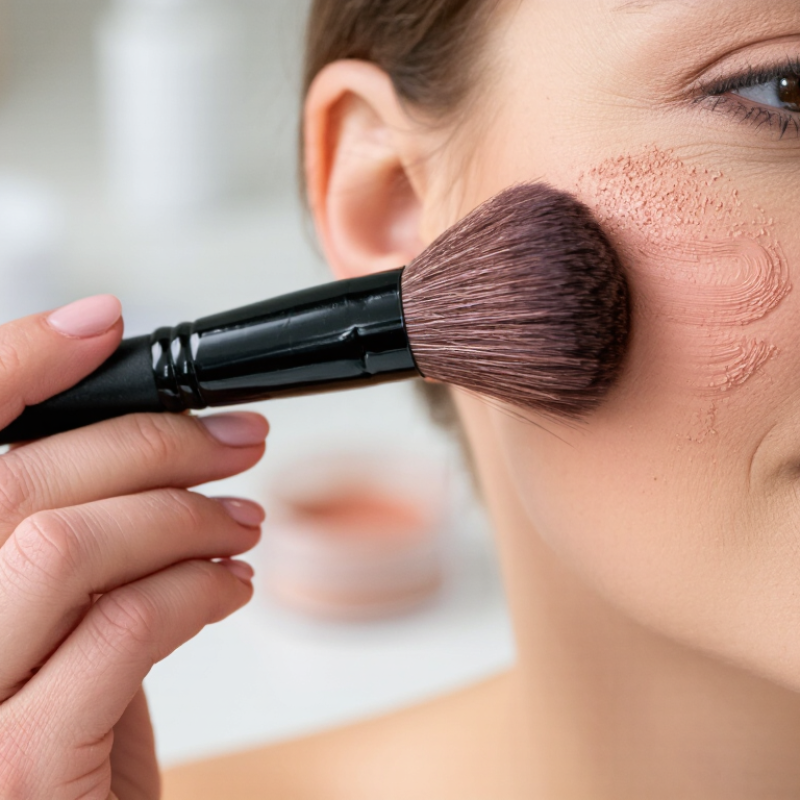
Why are kabuki brushes used for mineral powder? Their dense, rounded bristles can pick up loose powder and distribute it in small, controlled circles. This helps create an even-looking layer without leaving obvious streaks across the cheeks or forehead. The short handle also offers a steady grip, useful when buffing powder around the nose or along the jaw.

The result depends on more than the brush. A very dense brush may deposit too much product, while a lighter touch can build coverage gradually. Tap off excess powder first. Then work in gentle circles, especially around dry patches, where buffing can make texture more noticeable. Small details matter.

I can’t verify a published quotation from a named kabuki-brush expert without a source, so I won’t invent one. That caution matters in beauty advice: brush density, bristle material, and powder formula can all affect the finish. For many users, a kabuki brush is a practical tool for blending mineral powder smoothly—but it is not a guarantee of flawless coverage. Skin texture and technique still show. And that’s worth remembering.
Why Are Kabuki Brushes Used for Mineral Powder?

What Defines a Kabuki Brush: Dense Bristles and a Compact Handle

A kabuki brush is defined by two practical features: tightly packed bristles and a short, sturdy handle. The bristles may be rounded, flat, or slightly angled, but they form a compact head that holds mineral powder without letting it scatter too quickly. That close packing helps distribute loose or pressed powder across the skin with small, controlled circles.

The short handle changes how the brush feels in use. It sits close to the palm, giving the hand a steady grip and making pressure easier to adjust around the nose or chin. In practice, a light touch usually works better than pushing the brush firmly into the face. Tap off extra powder first; a visible cloud on the bristles can become a heavy patch on the skin. Small detail. It matters.

Dense does not always mean better for everyone. Very firm bristles may feel scratchy on sensitive skin, and a brush that is too full can leave mineral powder looking uneven. Check that the bristle tips feel soft and do not shed easily. Wash the brush regularly, then let it dry fully before using it again. I would not assume every kabuki brush applies powder the same way; head shape and bristle flexibility make a noticeable difference.

How Fine Mineral Powders Benefit from Controlled, Even Application

Fine mineral powder can look soft and natural, but it may cling to damp spots or gather around dry patches. A dense, rounded kabuki brush helps spread a small amount across the skin instead of leaving one concentrated stripe. Its compact bristles offer control around the nose and along the jaw. Less is better.

Tap the brush lightly after picking up powder; a faint dusting is usually enough for one area. Sweep in small circles, using gentle pressure, then check the finish in natural light. This lets you notice uneven coverage before adding more. Build slowly. Pressing hard can disturb the layer underneath and make the surface look less smooth.

The result depends on more than the brush. Skin texture, moisture, and the powder’s formula all affect how evenly it sits. I find that rushing the buffing step can leave visible patches, even with a suitable brush. A clean brush also matters: trapped oils and old powder can affect how product releases. Wash it regularly, rinse thoroughly, and let the bristles dry completely before using it again. If the powder feels gritty or irritates your skin, stop and check the product and your application method.

Why Kabuki Brushes Work Well with Mineral Powder

Representative particle-size ranges for common mineral ingredients (micrometers, μm)

Fine powders can settle unevenly if applied in a heavy layer. A dense kabuki brush helps distribute small amounts across the skin with controlled, even buffing. Particle sizes vary by grade and processing; these ranges are indicative, not universal.

How Brush Density Helps Pick Up, Buff, and Diffuse Powder

Mineral powder is loose and finely milled, so a brush needs to collect it without scattering too much. A kabuki brush has a compact head and closely packed bristles. Its short handle also makes it easy to hold near the ferrule and guide across the face. That matters. Dense bristles pick up powder across a broad surface, while a rounded or flat top can help press it gently onto the skin.

Density also supports buffing. Small circular motions spread powder more evenly than sweeping with a loose, floppy brush. Use light pressure around the cheeks and forehead, then ease up near the nose, where product can gather. If the brush feels scratchy or leaves visible streaks, try using less powder or a softer touch. The technique may take a few tries; a dense brush helps, but it cannot replace a gentle hand. Less is enough.

Tips: Dip the brush lightly, tap off excess, then build coverage in thin layers. Wash it regularly and let it dry fully before storing.

Why Are Kabuki Brushes Used for Mineral Powder? - How Brush Density Helps Pick Up, Buff, and Diffuse Powder

Brush characteristic How it affects mineral powder Best use Practical technique
High density Closely packed bristles hold powder near the brush surface and provide firm contact with the skin. This can help build coverage efficiently. Applying pressed or loose mineral foundation when more even, buildable coverage is wanted. Pick up a small amount, tap off excess, then buff in light circular motions. Add thin layers rather than loading the brush heavily.
Medium density Offers a balance of powder pickup and flexibility, making it easier to distribute product without concentrating it in one area. Everyday foundation application and blending across larger areas of the face. Use gentle circular or sweeping motions, working from the center of the face outward.
Lower density Allows more movement between bristles and generally deposits powder more lightly, helping soften the edges of application. Sheer coverage, setting powder, or diffusing powder over a finished base. Glide the brush lightly over the skin. Avoid pressing down if the goal is a soft, low-coverage finish.
Short, rounded shape Creates a compact working surface that is easy to control and can make buffing motions feel stable. Blending mineral foundation over cheeks, forehead, and chin. Use small, controlled circles and reduce pressure around textured or sensitive areas.
Flat-top shape Provides a broad, level surface for distributing powder over larger areas; the result depends on the brush’s density and the pressure used. Building coverage on broad areas of the face. Press lightly to place product, then buff gently to blend visible edges.
Soft, flexible bristles Can help spread powder smoothly and diffuse the transition between covered and uncovered areas. Finishing and blending, especially when a less concentrated application is preferred. Use light pressure and check the finish in natural light; add powder only where needed.
Powder pickup and control A dense brush can pick up more product per dip, so excess powder may look heavy or settle into dry areas if it is not tapped off. Any mineral-powder application where an even finish is important. Start with a small amount. Tap the handle gently to remove loose excess before applying.

Key point: A kabuki brush’s density can support controlled pickup and buffing, while brush shape, bristle flexibility, product amount, and pressure also influence the finish. Choose a brush based on the coverage and blending effect you want.

How SPF Testing Sets a Dose: ISO 24444 Specifies 2 mg/cm²

Why Are Kabuki Brushes Used for Mineral Powder?

A dense kabuki brush can buff mineral powder across the nose, cheeks, and forehead. Its broad, soft head helps create an even-looking layer, but appearance is not a dose measurement. That distinction matters when powder carries an SPF claim.

ISO 24444:2019 specifies an application dose of 2 mg/cm² for in-vivo SPF testing. On a 25 cm² test area, that equals 50 mg of product.

The standard sets a controlled test condition; it does not show that everyday brush use deposits the same amount. A paper by Faurschou and Wulf in the British Journal of Dermatology (2007) also examined how sunscreen quantity affects measured SPF, underscoring that dose changes protection results. The number is precise. Real application is less tidy.

A kabuki brush may leave powder on bristles, collect it unevenly, or miss small areas beside the nostrils. So a visibly matte finish cannot confirm the ISO test dose—or equivalent protection. Follow the product’s directions, and treat powder touch-ups as a practical step, not proof of a measured sunscreen layer. That caveat is easy to overlook.

How Brush Shape and Cleaning Affect Coverage and Performance

A kabuki brush’s dense, rounded head presses mineral powder close to the skin. Short, packed bristles can build coverage with small circular motions, while a flatter top deposits more product across cheeks or the forehead. A looser, tapered shape tends to leave a softer veil. Start with a light tap of powder; heavy loading can make even coverage look cakey. It depends on the brush.

Cleaning changes how the brush performs. Powder trapped between bristles can make them clump, leaving streaks instead of a smooth buffed finish. The American Academy of Dermatology recommends washing makeup brushes every seven to ten days. Rinse the bristles with the head pointing down, so water does not collect in the ferrule, then reshape and dry the brush flat. It takes a little patience.

Hygiene matters, too. A 2020 study published in the Journal of Applied Microbiology by Aston University researchers found bacterial or fungal contamination in more than 90% of the sampled beauty products and tools, including beauty blenders. That result does not measure kabuki brushes specifically, but it supports regular cleaning of reusable applicators. A clean brush is not automatically perfect; worn bristles can still distribute powder unevenly. Check the head in daylight. If it sheds or feels rough, coverage may suffer.

FAQS

What defines a kabuki brush?

It has densely packed bristles and a short, sturdy handle. The head may be rounded, flat, or slightly angled. Its compact shape helps spread powder in small circles.

Why does a short handle help with application?

It rests close to the palm and makes pressure easier to adjust. That can help around the nose and chin. Use a light touch.

How can I apply fine mineral powder evenly?

Pick up a small amount, then tap off the excess. Buff gently in small circles and check the result in natural light. Less is better.

Does a dense brush always give a smoother finish?

No. Firm bristles may feel scratchy on sensitive skin, while a very full head can leave uneven patches. Brush shape and flexibility matter, too.

How can brush cleanliness affect powder application?

Old powder and trapped oils can change how product releases. Wash the brush regularly, rinse it well, and let it dry completely. A damp brush may be a problem.

What amount does ISO 24444 specify for SPF testing?

The standard specifies 2 mg of product per square centimeter for in-vivo SPF testing. On a 25 cm² test area, that equals 50 mg. The test dose is precise.

Can a matte finish show that I applied the tested SPF amount?

No. A brush may hold powder, distribute it unevenly, or miss spots beside the nostrils. A matte look cannot confirm a measured dose or equivalent protection.

What should I do if mineral powder feels gritty or irritates my skin?

Stop using it and check the product and your application method. Skin texture and moisture can affect how powder sits. I still find this easy to misjudge.

Conclusion

Why are kabuki brushes used for mineral powder? Their dense bristles and compact handles make them easy to control, helping pick up fine powder and distribute it across the skin with a smooth, even finish. Gentle buffing can soften the look of visible powder and help diffuse it over larger areas, while careful, layered application can reduce patchiness and excess buildup.

Brush shape and technique both affect coverage: a rounded brush can buff broadly, while a flatter or angled shape may offer more targeted application. Keep the brush clean so residue does not interfere with pickup or spread. When mineral powder is intended to provide sun protection, application technique alone cannot confirm the protection level. ISO 24444 specifies 2 mg/cm² for SPF testing, so the tested dose is important; a light dusting may not match that amount or deliver the tested SPF.

Henry

Henry

Henry is a dedicated marketing professional with a profound expertise in the company's offerings. With years of experience in the industry, he possesses an impressive understanding of the market dynamics and consumer behaviors that drive success. Henry is committed to sharing his insights through......